Two Hands and a Needle File: Cleaning a Cast Link
Casting copies the shape, but it also leaves sprue marks and burrs. Hand filing at the bench decides how clean the finished piece looks.
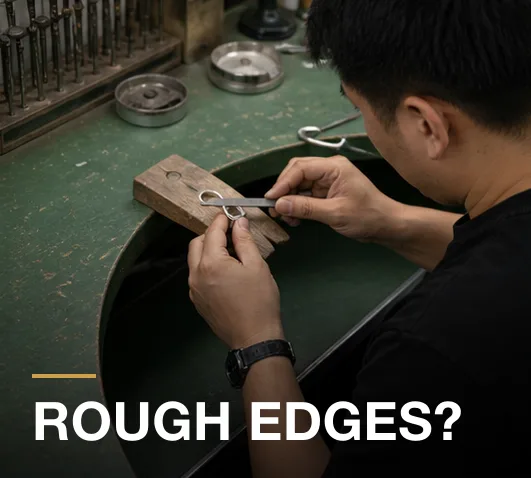
In this photo a jeweler at a Bangkok workshop bench holds a freshly cast silver link against the wooden bench pin and works a needle file along its inner edge. Casting copies the shape, but it also leaves the point where the sprue was cut, small burrs and edges that are slightly too sharp. Filing removes them by hand, a few strokes at a time, while the jeweler checks the line against the light. It is slow and very visible work: any edge left soft or uneven here will show again after polishing and plating, so this stage decides how clean the finished piece looks.
How do you make sure your pieces come out this clean after casting?
Three steps ↓
First the metal. At DMJ Concept, our jewelry factory in Bangkok, every piece is cast in gold or silver and then cleaned by hand at the bench, where sprue marks and burrs are filed away.
Then the surface: polishing sets the final look, and each piece passes quality control before it ships.
Questions people ask
What happens to a jewelry piece right after casting?
It is cut from the casting tree, the sprue point is removed and the surface is filed and sanded by hand. This guide covers common casting defects and how they are caught.
Who does the filing and finishing?
Bench jewelers at the DMJ Concept workshop in Bangkok, the same team that handles jewelry manufacturing from the first sample to production.
Where can I see finished work and start a project?
Browse CAD designs and jewelry references, then send DMJ Concept your project with a sketch or photo.