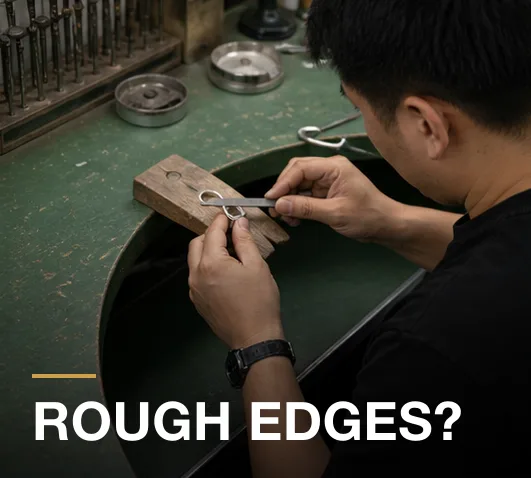
One Wire, One Twist: Reading a Floral Ring in CAD
A thin band that climbs and wraps around a faceted top looks simple. CAD decides whether it survives casting and daily wear.
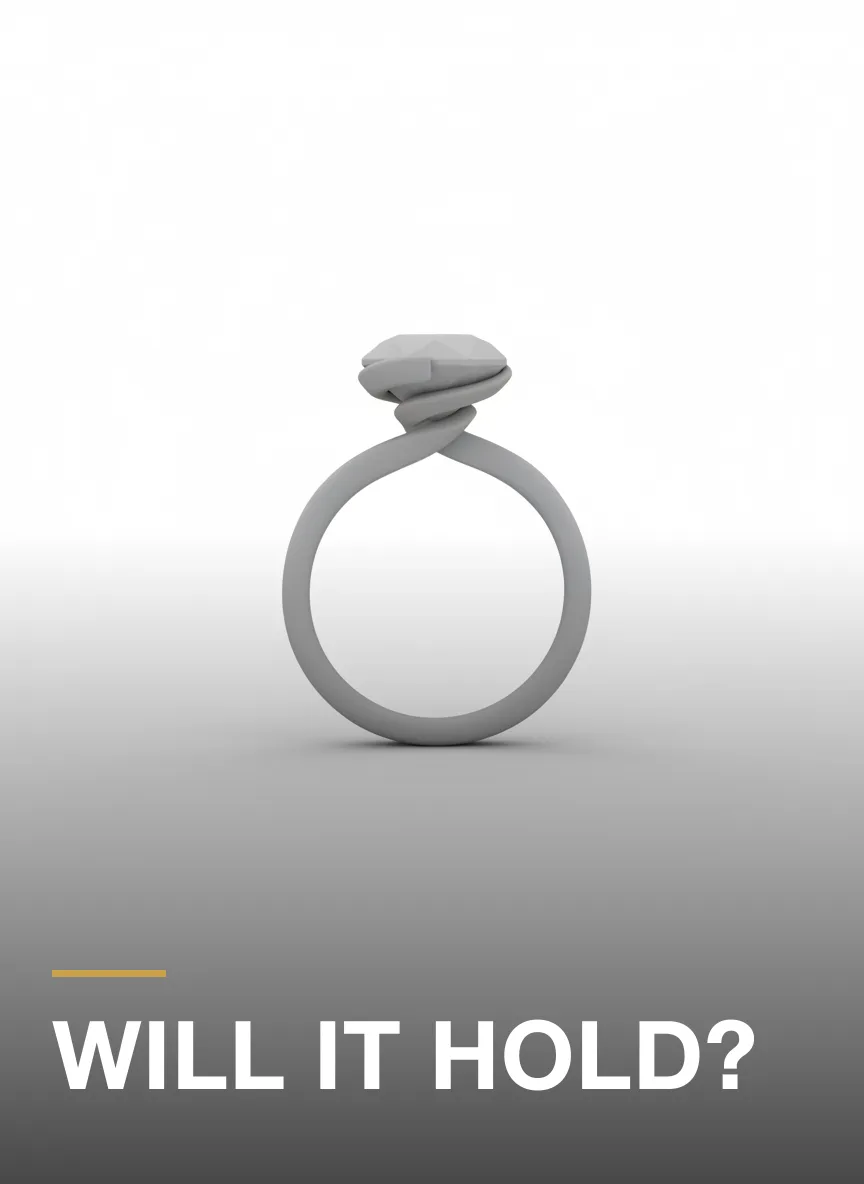
This statement ring from the DMJ Concept CAD archive starts as a plain round band, then twists upward and wraps around a faceted head, like a stem closing around a bud. The idea reads in one glance, which is why it works. The risk sits in the same place as the beauty: where the wire turns, the metal gets thin, and where it meets the head, the top needs real support. In CAD a designer can check the wire diameter at every point of the twist, the contact area under the head and how the ring sits on the finger before any metal is poured.
How do you turn a sketch like this into a ring that holds up every day?
Here's how it works ↓
Start with a drawing or a photo. At DMJ Concept, our jewelry factory in Bangkok, we build the 3D model in CAD and set a minimum wire thickness so the twist does not crack or bend after casting.
Then we print a resin model so you can judge the scale on a real hand, and cast it in gold or silver once the proportions are approved.
Questions people ask
What do I need to send to start a twisted ring like this?
A sketch, a reference photo or a few words about the shape is enough. Add your ring size and metal if you know them. The full model is on the CAD page of this ring.
Who checks that the twist is strong enough?
The DMJ Concept CAD designer measures the wire at every turn before production, and the bench jeweler checks it again after casting. This guide explains why wall thickness matters.
How long does it take from CAD to a finished ring?
It depends on the detail and the number of revisions. See how long custom jewelry production takes for a realistic timeline.